
Masayoshi Uehara上原 正吉 — Engineer & Founder
Since writing BASIC on an NEC PC-6601 in second grade, I've grown a hosting business, pivoted fully to mobile, optimized large-scale systems, and now build AI agents — each time the era turned I moved to the leading technology of the day, an engineer who has owned the work on the ground from design through implementation and operations.
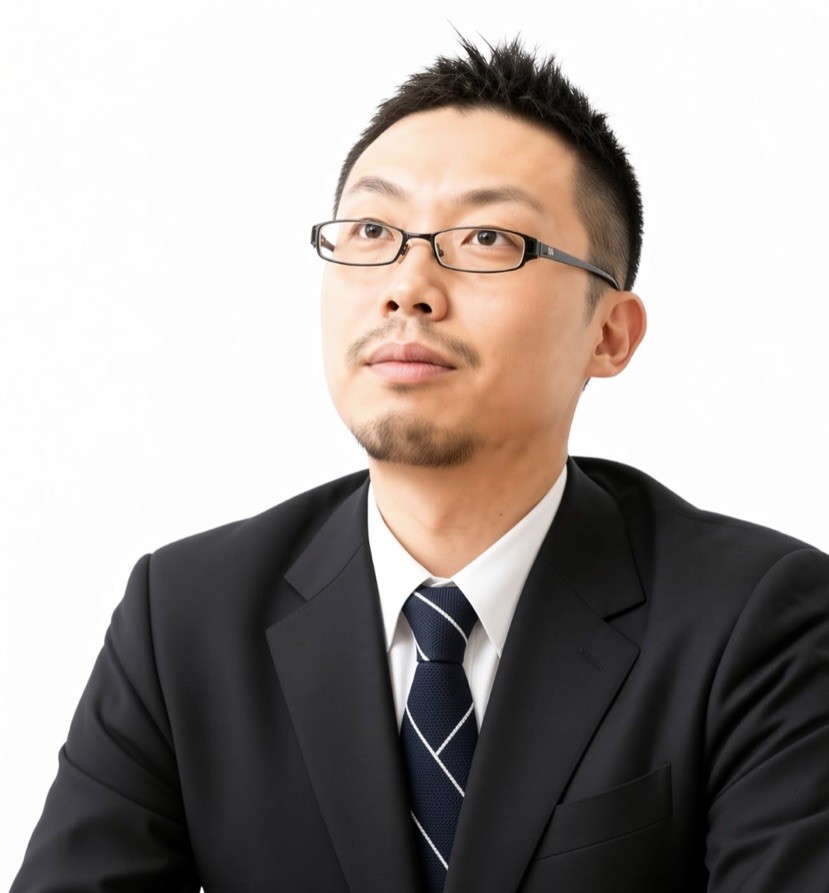
The path — hands-on, across every layer
The first time I touched a computer was in second grade — about forty years ago now. Since then: hosting, mobile, cloud, and AI. Each time the era turned I switched to the leading technology of the day, yet I never once left the ground. From here, I'll look back in my own words.
My first computer was an NEC PC-6601 my parents brought home. Back then there wasn't even a notion of "booting an OS" — you flipped the power and BASIC came up, the screen waiting for input. If you wanted the machine to do anything, you had to write the code yourself. Line by line from line 10, I'd type commands and watch the screen do exactly what I'd told it. That feeling was the start of everything.
Next came Fujitsu's FM TOWNS, one of the earliest machines with a CD-ROM. Before long I was choosing parts one by one and assembling PCs myself. I learned by hand what each part does and where the bottlenecks form — and knowing hardware from the inside became the foundation for designing servers and networks later on.
I went to the US and majored in IT management at university. Not just the technology itself, but how to assemble it into a business and keep it running. Setting both the power to build and the power to make it work as a business as my own axis, early on, is what led to founding a company later.
My first company was founded in America. I assembled PCs that could run both the Japanese and English environments, one at a time, and handled everything from the sale to user support after delivery. Here I learned to see the OS, the network, the server, and what the user is actually struggling with all as one continuous problem. That is the starting point of EarthLink Network Co., Ltd.
From supporting individual machines, I moved to providing the platform that supports a service itself. First I launched a Linux hosting business, then took on Windows hosting while it was still rare in Japan — which Microsoft featured as a case study. You can't take it down, you can't let it slow; in that tension I learned availability and operations in my bones.
I offered rental servers running ColdFusion — then an Allaire product, before either Adobe or Macromedia — among the early ones in Japan to do so, and expanded into dedicated servers as well. Designing the best configuration for each use case became the groundwork for the contract and consulting work that followed.
Requests to "build the system itself" grew, and I moved into contract system development. From there it widened into consulting — which technology to choose, where the risks are, how to build so it lasts — supporting the decisions made before anything is built. From "the person who builds" to "the person who decides how to build," my role changed a notch.
I started at C# 2.0 and worked through ASP.NET and C# 3.0. At the same time I ran a column on C# for All About, putting into words the very places beginners stumble. Building and teaching in parallel — that style took shape around this time.
I held Microsoft and Cisco partnerships continuously. The Cisco Silver Partnership in particular — there were only about 19 in all of Japan at the time, and among big names like NEC and NTT, ours was the only limited company on the list. Being judged not by size but by skill and track record — that feeling still supports my staying hands-on with technology to this day.
As the iPhone began to take off, I saw mobile becoming the next center of gravity and shifted the axis of my work all at once. Before Swift existed, I wrote apps in Objective-C, and replaced every Windows PC in the office with a Mac. That way of "once you're sure, commit everything" maps directly onto how I face AI now.
I moved into Android too and ran a development school teaching both. As gaming was rising and systems written in PHP were moving to smartphones, I moved to Unity, which lets you build once for both. Having worked with it since the 2.0 days, I got calls from company after company, getting down into the floor from adoption support through CI/CD automation.
Before Kubernetes spread, I'd already built a Docker-centered setup. Push a feature branch and an environment dedicated to it stands up automatically, verifiable at its own subdomain like branch.example.com — so each person has their own runtime, free from anyone else's interference. I brought this to companies back when preview environments were not yet common.
At the height of jQuery, I read that React was the next wave and moved my footing there over ten years ago. Beyond implementation, I set coding standards so a team could write to one consistent quality, and designed the onboarding for new engineers. Handing part of the judgment to a mechanism is the very thinking that later carried into drawing the line for what to delegate to AI.
What I've been especially good at is making large systems efficient. Beyond systems with tens of millions of members, there's the spiky traffic common in gaming — leaping all at once at lunchtime, dropping when it's over, leaping again after the workday ends — where designing to the average will always break. I've designed the network architecture that meets the peak yet shrinks without waste.
In every era, I never left what I make to someone else. From the founding I've designed my own company's sites down to the details, and the products and websites I publish today are mine from the look to the internals. I've kept building in-house products too: QuickRec (unified call recording), Heartmap (gaze visualization), WinManager (management and billing for rental-server operators).
I'd been working with AI since ChatGPT first started spreading. When agentic coding — Claude Code and the like — arrived, I was certain of a "big bang bigger than the internet or the iPhone," and steered into building while many were still watching from the sidelines. On the foundation of everything I've stacked up, I've now officially launched a lineup of 18 products — with the multi-AI workspace Prompt Flow Studio at its core — worldwide, Japan included.
End to end, across every domain
Not just design, not just code. From requirements to implementation, infrastructure, operations, and quality assurance — Masayoshi Uehara moves across domains, verifying and building it himself. That is how he works.
Full-stack engineering
Front end (React/TypeScript) to back end (C#/.NET/Python/Node) to mobile (Swift/Unity). Modern and legacy alike.
Cloud & infrastructure
From servers and network design to AWS/Azure/GCP, Docker/k8s and IaC — built end to end.
AI & automation
Multi-LLM orchestration, agent design, RAG, quality gates — AI wired into real workflows.
Performance & scale
Load balancing for high-traffic sites, DB design and tuning, cloud-cost optimization — not just working, but holding up.
Architecture & PM
Requirements, high-level and DB design, through PMP/CMMI-based governance and quality control of large core systems.
Team & growth
Training and facilitation design. Beyond technology — building how a team draws out its strength.
What I've shipped
// Own products
- Prompt Flow Studio(2026) — a multi-AI workspace for using many AIs on one screen. Released worldwide.
- QuickRec— call recording with unified email/FAX management. Exhibited, featured in press releases, patented.
- Heartmap— webcam gaze detection: see where on the screen a user is looking.
- WinManager— unified management and billing for hosting providers.
- MailEnable / Acunetix— national distributor: domestic rollout, localization and support.
// Consulting / contract
- AI workflow tools (2024–2025)— built PR-review automation, cloud-cost alerts and meeting summarization.
- Major insurance & gas companies— consulting on core-system replacement.
- Major ticketing site— load-balancing consulting (design support) for a high-traffic site.
- Cloud optimization— cost and architecture consulting.
- CMMI / ISO / ISMS— efficiency improvement and certification support.
Certifications — turning learning into judgment on the ground
Each time I widened the domains I work in, I kept earning certifications — a way to systematize what I'd learned on the ground. The point was never to line up titles. I use them as a foundation: to speak a common language with specialists from other fields, to explain the reasoning behind a decision, and to move a project forward.
Tech / Cloud
I never confined myself to networking alone, databases alone, or applications alone — I studied the technologies that make up a system, across the board. The range of the certifications mirrors the range of work I've actually done.
Project management / Privacy
A system isn't finished just because it's implemented correctly. You have to manage the goal, the budget, the quality and the risk, build agreement, and carry it through to operation. So alongside technical certifications, I studied project management and personal-data protection systematically too.
People / Learning / Facilitation
To learn how people understand, learn, and move to action, I earned certifications in NLP, therapy and mind mapping as well. What I gained there feeds into seminars and corporate training, onboarding, and facilitating teams.
Roles in practice — individual skill into team results
Even when the technology and the plan are right, that alone doesn't get a team moving. Apart from certifications, these are roles I've taken on in practice.
Knowing the technology, moving the business forward, and getting people and teams to work — I try to hold these three together, valuing both the frameworks I learned through certifications and the experience I've built on the ground.
Because I can build it, I can delegate it
Having touched every layer with my own hands, I know exactly what to hand to AI and what a human must decide. I practice that line inside my own company.
Build what you can, yourself
Write the tools you need instead of outsourcing them. You understand the internals — so you can draw the line for AI precisely.
AI does the work; humans decide
AI can produce the draft. But whether it ships is a human call. Judgment becomes the core work.
Quality lives in mechanisms
Build quality gates that refuse to say "done" without evidence; turn repeated decisions into procedures. Mechanisms, not vigilance.